History of Presidents Opposing Supreme Court: Separation of Powers

Seals of the Three Branches of the US Government. Image: Wikimedia

History of Presidents Opposing Supreme Court: Separation of Powers
The question on many people’s minds right now is: What’s going on between the President and the Supreme Court? How does the separation of powers between the US government’s Executive, Judicial, and Legislative branches work?
A more helpful question, to put it in historical perspective, is:
Have any US Presidents either ignored or opposed the dictates of the Supreme Court, and what can we learn from this history?

Supreme Court building, Washington, DC. Image: Associated Press
The short answer may be surprising, but the longer answer is more intriguing:
- Short answer: Yes, it’s happened at least 10 times in American history
- Longer answer: Sometimes they succeeded, sometimes they didn’t
Is there a difference between Ignore and Oppose?
Not much; in both cases, these words describe presidential defiance of the Supreme Court. However, there is a difference in the level of acrimoniousness. Outright defiance by the president has occasionally been called a “constitutional crisis,” challenging the separation of powers doctrine, with significant legal and political consequences. But ultimately, it all depends on how it plays out.
Nevertheless, there have been several overt presidential defiances over the last two-plus centuries of our Constitutional history, and others have simply quietly ignored the dictates of the Judicial branch of the government.
Starting with the two most notable examples from the 1800s:
1832: Andrew Jackson defied Supreme Court on Ancestral Lands

Andrew Jackson. Image: Wikimedia

The first US president most commonly associated with defying the federal court system was Andrew Jackson.
He consistently advocated for the relocation of Cherokee individuals from their ancestral lands in Georgia. In 1830, he enacted the Indian Removal Act, which conferred upon the president the authority to regulate interactions between the federal government and Native American tribes.
Even the US Congressman from Tennessee, Davy Crockett, argued that President Jackson was violating the Constitution by refusing to enforce treaties that guaranteed Indian land rights.
The Supreme Court decided in Worcester v. Georgia that Native American nations were sovereign entities, and only the United States – not the state of Georgia – possessed the authority to negotiate land and territory agreements. The act conferred upon the Cherokee Nation the full rights to their land within Georgia.
Jackson reportedly responded to the ruling with the famous remark about the Chief Justice of the Supreme Court,
“John Marshall has made his decision; now let him enforce it!“
Jackson permitted the Georgia governor and militia to encroach upon Cherokee territory, which ultimately resulted in the forced relocation of Cherokee individuals from Georgia, now known as the “Trail of Tears.”
While Jackson’s actions were controversial and ignited substantial debate regarding the “checks and balances” among the governmental branches, his response to the court’s ruling amounted to a fundamental refusal to comply with its decision. This act of defiance towards the court’s authority remains one of the most prominent instances of a president disregarding the judicial branch’s prerogatives.
President: 1
Supreme Court: 0
1861: Abraham Lincoln was refused Suspension of Writ of Habeas Corpus

Abraham Lincoln. Image: Wikimedia

At the beginning of the Civil War, there were local riots and uprisings from Confederate sympathizers. President Abraham Lincoln suspended the writ of habeas corpus, allowing him to arrest Confederate sympathizers without trial. Habeas corpus, or “you should have the body,” is a legal principle that protects an individual from being unlawfully imprisoned without bringing that individual before the court to justify the reason for their detention.
The Supreme Court ruled that only Congress possessed the authority to suspend habeas corpus. This episode was called the Ex parte Merryman case.
Historical Errata:
To be fair, this was decided by Supreme Court Chief Justice Taney acting alone, not with the full court. However, the story which has been related by current Supreme Court Justice Sonia Sotomayor, as well as other judges, incorrectly stated that the case was filed with the US Supreme Court.
What really happen? Chief Justice Taney decided Merryman under special authority granted by the Judiciary Act of 1789 to all Article III judges and Justices. Section 14 of the act stated: “And that either of the justices of the supreme court, as well as judges of the district courts, shall have power to grant writs of habeas corpus for the purpose of an inquiry into the cause of commitment.”
In any event, despite Lincoln and the US Army’s defiance of the order throughout the Civil War, Congress eventually acknowledged its validity through a retroactive declaration. Congress officially suspended habeas corpus in 1863, two years after the case was filed.
President: 1
Supreme Court: 0
During the last century of American history, there have been well-known and more obscure examples – but with fewer presidential successes:
1936: Franklin D. Roosevelt was denied the Agricultural Adjustment Act

Franklin D. Roosevelt. Image: Wikimedia

During the Great Depression, President Roosevelt tried to revitalize the farm industry and restore purchasing power for them. His Agricultural Adjustment Act taxed processed farm product companies to generate subsidies for farmers.
The Supreme Court ruled the act unconstitutional as the government could not levy a tax on companies merely to have that money paid back to farmers. However, the act was adjusted two years later and continued in its new form.
President: 1
Supreme Court: 0
1952: Harry S. Truman was denied US Steel Mills Takeover

Harry S. Truman. Image: Wikimedia

During the Korean War, US steel mills threatened mass strikes. Fearing it would halt steel production during the war, President Harry Truman ordered his Secretary of Commerce to take over all the steel mills.
The Supreme Court ruled a few weeks later that his action was unconstitutional, thereby allowing steel workers to strike.
President: 0
Supreme Court: 1
1974: Richard Nixon was refused Executive Privilege

Richard Nixon. Image: Wikimedia

President Richard Nixon, during the Watergate indictments, refused to release the tapes recorded in the White House during his Presidency, claiming executive privilege for national security.
The Supreme Court ruled unanimously against him. The House Judiciary Committee, which was then considering articles of impeachment against him, stated clearly that if President Nixon did not turn over the tapes, that refusal in and of itself could be considered grounds for impeachment.
Eight hours later, the tapes were released to the House of Representatives. He resigned from office two weeks later, becoming the first US president to do so.
President: 0
Supreme Court: 1
1996: Bill Clinton was refused Presidential Immunity

Bill Clinton. Image: Wikimedia

President Bill Clinton was involved in the civil law case Clinton v. Jones, where he was accused of sexual harassment by Paula Jones. He endeavored to get the case dismissed on the grounds of presidential immunity. A judge denied the request, and the Supreme Court ruled that a president is not immune to civil law cases while in office.
He was eventually found in contempt of court for perjury about a sexual relationship with Monica Lewinsky, leading to his impeachment, though eventually, he was acquitted of all charges.
President: 0
Supreme Court: 1
2006: George W. Bush ignored Congressional Requirement for Guantanamo Military Trials

George W. Bush. Image: Wikimedia

President George W. Bush, as part of his post-9/11 security strategy, ordered military trials for Guantanamo Bay detainees.
The Supreme Court ruled that he could not do this without Congressional approval for tribunals, otherwise violating international law.
President: 0
Supreme Court: 1
2014: Barack Obama defied Senate in Government Appointments

Barack Obama. Image: Wikimedia

When the Senate is in recess, the president can temporarily appoint individuals to government posts while the Senate is not in session. President Barack Obama made government appointments while the Senate usually takes recess.
However, the Senate had not officially declared itself in recess at that time. A suit was brought against the president, and the Supreme Court unanimously ruled against the president.
President: 0
Supreme Court: 1
2017: Donald Trump was prevented from closing DACA by Federal Court

Donald Trump. Image: Wikimedia
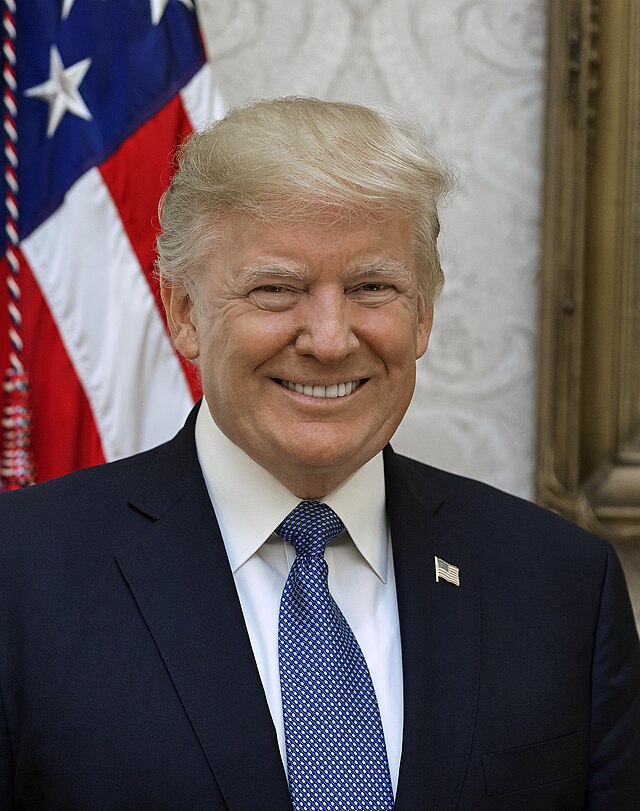
During his first term, President Donald Trump wanted to shut down the DACA (Deferred Action for Childhood Arrivals) Program, which President Obama created in 2012 by executive order. The US Court of Appeals for the 9th Circuit ordered the president to continue the program.
The Supreme Court ruled that the Trump administration’s attempt to end DACA was illegal, allowing the program to continue for those already enrolled. Nevertheless, his administration moved to fortify the program and work towards a more permanent solution. However, DACA’s future still faces uncertainty due to ongoing legal challenges and the lack of comprehensive immigration reform from Congress.
President: 0
Supreme Court: 1
2024: Joe Biden defied Supreme Court on Student Loan Forgiveness

Joe Biden. Image: Wikimedia

Andrew Jackson invited the Chief Justice to stop him. President Joe Biden, in February 2024, after ignoring the Supreme Court’s landmark 2023 ruling that his previous loan forgiveness plan was illegal, boasted:
“The Supreme Court blocked it, but that didn’t stop me.”
He wrote off student loan debts twice, bringing the total to $138 billion. Admittedly, he did not “cancel” the debt; he transferred it from the borrowers to the taxpayers to finance it.
President: 1
Supreme Court: 0
How presidential defiance of the Supreme Court will work in the future is anyone’s guess, but there is historical precedence for it, more often than most people think.
What can we learn from history?
Bill Petro, your friendly neighborhood historian
billpetro.com
Podcast Version:
