History Articles

Li’l Abner comic. Image: Animation Archive
HISTORY OF SADIE HAWKINS DAY
Sadie Hawkins Day falls in mid-November, often observed around November 13, when women may ask men out on a date or to a dance.
It is a folk holiday or a pseudo-holiday, similar to May the Fourth (Be With You), aka Star Wars Day.
Why haven’t you heard of it before?

St. Martin, oil on wood (1512) from the Unterlinden Museum, Colmar, France. Image: Wikimedia
HISTORY OF ST. MARTIN’S DAY
While St. Martin’s Day is not widely celebrated in the U.S., except in more liturgical churches, St. Martin is more famous and influential than you might think.
Who was St. Martin, why do we celebrate his feast day, what’s the connection to Martin Luther and Christopher Columbus, why is he renowned, and what do we eat on his feast day?

Remembrance Day Poppy, Lest We Forget. Image: Wikimedia
HISTORY OF VETERANS DAY

Lest we forget…
But that’s just it; we do forget things.
As individuals, we forget things that are important to us. Companies seem to possess little in the way of corporate memory to do things better the next time. Countries forget what happened in their past, what makes them unique.
In many parts of the world — Europe in general, and especially several countries of the former British Empire specifically — there are memorials in town squares commemorating war heroes, usually with the words from Rudyard Kipling’s poem “Recessional” (1897), borrowing from Deuteronomy 6:12
“Then beware lest thou forget the Lord, which brought thee forth out of the land of Egypt, from the house of bondage.”

Hedy Lamarr. Image: Vanity Fair
HISTORY OF HEDY LAMARR: TECHNOLOGY INVENTOR
Hedy Lamarr, the Austrian-American actress and Hollywood legend known as “the most beautiful woman in the world,” is remembered today, November 9, 1914, on her birthday as a technology pioneer whose ideas were a forerunner of spread-spectrum transmission principles used in wireless systems like WiFi, GPS, and Bluetooth.
“What?” you say.
“Indeed,” say I.
More than a pretty face, she had a genius-level IQ of around 140. The Vienna-born Hedwig Eva Maria Kiesler began studying engineering at an early age but put her studies aside to dedicate herself to the theatre.

Guy Fawkes portrait. Image: Wikimedia
HISTORY OF GUY FAWKES NIGHT
For our friends across the Pond
November 5th is known as “Bonfire Night” or “Guy Fawkes Night,” and across Britain, people set off fireworks, light bonfires, and burn effigies of Guy Fawkes. Historically, Guido Fawkes was an Englishman who, in popular legend, tried to blow up the Houses of Parliament with barrels of gunpowder.
He was caught, imprisoned, tortured on the rack, and finally executed.

Photo by Element5 Digital on Unsplash
HISTORY OF ELECTION DAY
Why does the U.S. vote on a Tuesday in November?
Historically, the United States was an agrarian society, where much of the calendar revolved around farming. In 1840, Congress set voting day on the first Tuesday following the first Monday in November.
This time provided a convenient month for farmers, who needed to travel perhaps overnight to the county seat’s polling places following the Autumn harvest season. The weather would not have turned bad enough to make rural roads impassable.

All Souls’ Day by William-Adolphe Bouguereau
HISTORY OF ALL SOULS’ DAY: AND DAY OF THE DEAD
November 2 is All Souls’ Day or Day of the Dead. As I mentioned previously in my article on the History of Halloween, Allhallowstide includes these three holidays:
- October 31: All Hallows’ Eve (Halloween)
- November 1: All Hallows’ Day (All Saints’ Day, Feast of All Hallows, Hallowmas)
- November 2: All Souls’ Day
What’s the Difference Between these Holidays?
- Halloween: we have already discussed this at length.
- All Saints’ Day: commemorated those perished saints and martyrs (from the Greek word “witness” who died by persecution) who are now in Heaven.
- All Souls’ Day: is a day of prayer — especially in the Roman Catholic Church — for the souls of believers in Purgatory, who await having their souls purged of sin.
 HISTORY OF NOVEMBER
November is the penultimate month of the year, meaning “next to the last.” It used to be the ninth month (Latin: novem) until the ancient Romans shoehorned in January and February at the beginning of the year.
November enjoys the distinction of being situated between the two biggest holidays in the American calendar… at least revenue-wise. October has Halloween, America’s #1 candy-revenue holiday, and a sucrose-collecting bonanza for children nationwide. December features Christmas, #1 in everything else, and a favorite for those who are children-at-heart.
 INFORMATION REFORMATION

I wrote the following article three decades ago when I was a technology evangelist at Sun Microsystems.
Back in the mid-’90s, we experienced the early part of the first wave of “The Web.” Today newer Web technologies have expanded what was largely a “reader-oriented” phenomenon into a dynamic read-write participatory social platform.
While the mantle of managing information has passed to a new generation of companies, the basic principles of information production and exponential growth remain the same.
Every October 31, we observe the anniversary of the German Reformation. Presently, there is a lot of talk about the Internet Explosion. The two share several significant similarities.
Indeed, one could call it the “Information Reformation.”
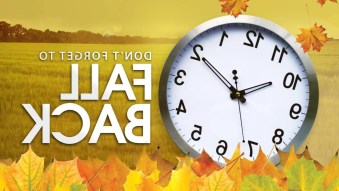 HISTORY OF DAYLIGHT SAVING TIME – ENDING


Daylight Saving Time, or DST, is a clever campaign to convince us that we’re getting more daylight each day when, in reality, we’ve simply changed our clocks and then forgotten about it within two weeks.
DST begins each year at 2:00 a.m. on the second Sunday in March in most of the United States and its territories; however, some places have not bought into this campaign: it is not observed in Hawaii, American Samoa, Guam, Puerto Rico, the Virgin Islands, the city of South Bend, Indiana, nor the state of Arizona… except for the Navajo Indian Reservation, which does observe DST.

Wittenberg Door
HISTORY OF OCTOBER 31: MARTIN LUTHER
See my miniseries on the life of Martin Luther.
On October 31, 1517, the Augustinian monk Martin Luther nailed 95 propositions or theses to the door of the Castle Church in Wittenberg, Germany, marking the beginning of the Reformation.
Of course, the Reformation began long before that, but this date is a convenient “coat-hanger” for historians to mark the beginning of the Protestant* Reformation.
However, the 95 Theses were not intended as a call to reformation, and the story behind this event is fascinating and reveals their real purpose.

All Saints’ Day, by Fra Angelico. Image: Wikimedia Commons
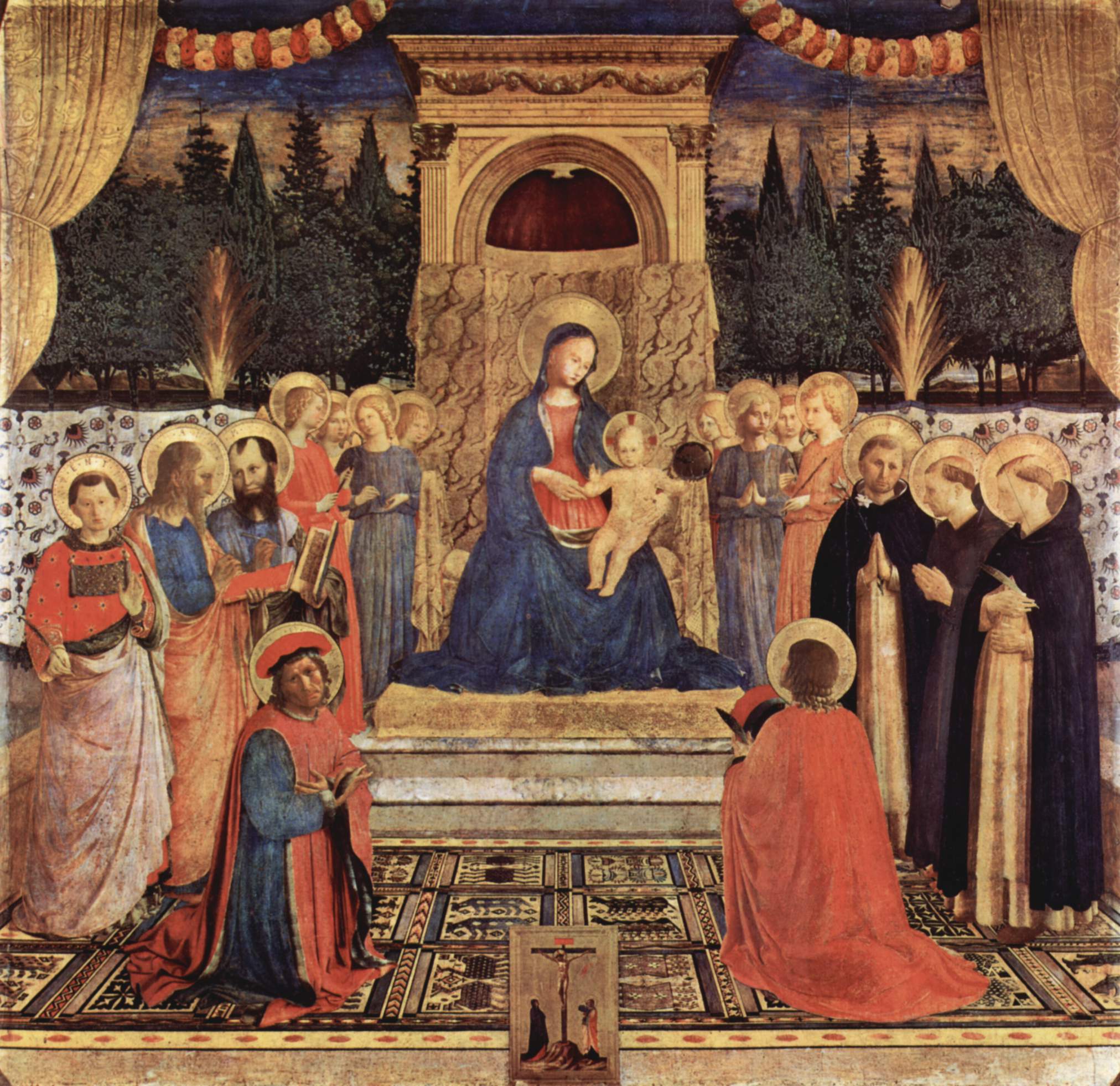
HISTORY OF ALL SAINTS’ DAY
November 1 is All Saints’ Day, also known as All Hallows’ Day. The night before is known as “All Hallows’ Eve,” or Halloween.
This day is also known as the:
- Feast of All Saints
- Feast of All Hallows
- Solemnity of all Saints
- Hallowmas, in the strictly religious sense
When was it first observed, what practices are associated with it, and how does it differ from All Souls’ Day?