History Articles
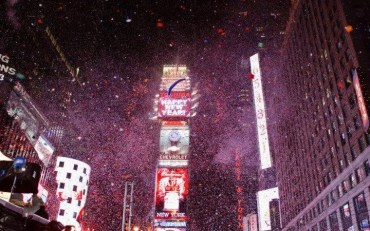
Times Square, New York City
HISTORY OF NEW YEAR’S EVE

New Year’s Eve, according to the Gregorian Calendar, is the last day of the year, known as Old Year’s Day or St. Sylvester’s Day.
You may remember reading that Emperor Constantine was considered the first “Christian” Roman Emperor. St. Sylvester, the Bishop of Rome, baptized Constantine in the 4th century.
 HISTORY OF AULD LANG SYNE: WHAT DOES IT MEAN
Why is it that each New Year’s Eve, we sing “Auld Lang Syne,” but do we know what it means?
The song contains words from a language few are familiar with, in a syntax confusing to most, and is from a poem about friends recalling adventures they had long ago, which had nothing to do with New Year’s Eve.

My Top 5 Articles of 2025
Gentle Readers,
Happy End of 2025! Thank you for visiting my blog at billpetro.com.
I publish my articles not only on:
my blog, my free email newsletter, Medium, and Substack…
Additionally, some of my readers find my articles through syndicate links on:
Facebook, Twitter/X, LinkedIn, Pinterest, Mastodon, Tumblr, Bluesky, Threads, Quora, Farcaster, and Reddit.
This year, I have recorded almost 100 episodes of podcasts as a channel for my content. Now, I have welcomed Gentle Listeners as well.
These are the Top 5 articles from my blog this year based on the number of reader views at billpetro.com

Massacre of the Innocents, by Giotto
HISTORY OF CHILDERMAS: FEAST OF THE HOLY INNOCENTS
Childermas, from an Old English word meaning the Mass of the Infants, is a festival in the church calendar that began in the fifth century.
It is celebrated in the Western Church on December 28 and in the Eastern Church on December 29. It is also known as Bairn’s Day (Scots term for child) and Día de Los Santos Inocentes in Spanish.
It commemorated the date when King Herod ordered the massacre of the children under two years of age in Bethlehem in an attempt to kill the baby Jesus, who “was born King of the Jews,” according to the Wise Men as recorded in the Gospel of Matthew Chapter 2.
How many were killed?
Some traditional claims involve as many as 6,000, 14,000, or even 144,000, though, given the number of male children in Bethlehem at that time, a few dozen are more likely.
Did this actually happen? Do we have any evidence from outside the Gospel story?
(more…)
 HISTORY OF HOLIDAY FRUITCAKE
December 27 is National Fruitcake Day.
You may be wondering:
“My friendly neighborhood historian is writing an article on fruitcake? Is he as nutty as a fruitcake?”
And therein begins our tale…

St John, by Peter Paul Rubens, c. 1611. Image: Wikipedia

HISTORY OF THE FEAST OF ST. JOHN
December 27, since the 5th century, has marked the day in the church calendar for celebrating the life of St. John the Evangelist and is known as the Feast of St. John.
We’ve already mentioned that the day before, December 26, is the Feast of St. Stephen. The following day, December 28, is the Feast of the Holy Innocents, referring to those babies killed by King Herod the Great in Bethlehem.
Which St. John is celebrated in this feast?
HISTORY OF THE FIRST AMERICAN CHRISTMAS: 1776

Washington Crossing the Delaware, Emanuel Leutze. Image: Wikipedia

Part of the series on America 250, the US Semiquincentennial
It is called the first “American” Christmas because the Declaration of Independence was created the previous summer, essentially “divorcing” America from England and declaring our country an independent nation.
Perhaps it would be more accurate to call it the first “United States Christmas,” quoting the first line of that Declaration:
“The unanimous Declaration of the thirteen united States of America…”
Admittedly, the country had not yet created a solid form of government. The Articles of Confederation were not produced until 1781, nor was the subsequent Constitution (1788). But there is no doubt that Americans saw themselves as independent of England… at least most did. But these “Patriots” had to fight for their independence in a War of Independence, a Revolutionary War.
What happened on Christmas Day, 1776?

Christmas Presents under the Christmas Tree
Christmas Presents: What Day Do You Open Them?
Some open presents Christmas Eve night, others open them Christmas morning.
When do you open Christmas presents?

US Army infantrymen taking defensive positions in fresh snowfall near Amonines, Belgium, during the Battle of the Bulge. Photo: Wikimedia

HISTORY OF CHRISTMAS EVE AND THE BATTLE OF THE BULGE: 81 YEARS AGO
On Christmas Eve, 1944, my father, Staff Sergeant John Petro, entered the frontline at Strasbourg with the 42nd “Rainbow” Infantry Division in 20-degree weather. He was part of three regiments – hurried from training in the U.S. – to France without the rest of their divisional support units, expecting to spend time in a quiet sector to learn the ropes of combat. But it was not to be quiet.
Eight days earlier, the Battle of the Bulge had begun. The 42nd Division, along with others, supplied much-needed reinforcements to the most extensive and bloodiest battle of World War II involving American forces. 610,000 Americans, 55,000 British, and 72,000 Free French troops were involved in this one battle.
The German Wacht am Rhein, or “Watch on the Rhine” offensive, began a week before my father arrived. By Christmas Eve, the American troops at the Battle of the Bulge had taken heavy casualties, and reinforcements were invaluable. The bad weather had weakened the American supply lines. The winter of 1944 was one of the coldest in recorded history; temperatures averaged 20 degrees Fahrenheit. Frostbite and “trench foot” were rampant.
Of all the uniformed American troops in the world at that time, 1/8th took part in the Battle of the Bulge.

Original Sears ad. Image: NORAD Santa
HISTORY OF THE NORAD SANTA TRACKER
How did a typo in my local newspaper erroneously connect to the Continental Air Defense Command (CONAD) Operations Center, at NORAD here in Colorado Springs, with requests for the flight location of Santa Claus on Christmas Eve in 1955 — and in the 70 years since?
And how can you check in on Santa this year?

5 CHRISTMAS MYTHS: NOT FOUND IN THE NATIVITY STORY
I am often asked to explain the history behind a holiday: is it based on history, tradition, or legend? The best historical sources on the birth of Jesus are found in two Gospel accounts in the New Testament: St. Matthew and St. Luke.
- St. Matthew was a companion of Jesus during his ministry.
- St. Luke was not. Instead, he was a companion of the Apostle Paul during his journeys.
Still, Luke shows a detailed knowledge of primary sources. He appears to have spoken directly to Jesus’ mother, Mary, perhaps during his travels while she lived in Ephesus with St. John. Luke’s account contains much more detail and is four times as long as Matthew’s.
Below are 5 Myths frequently associated with our celebration of Christmas, which are not actually found in the Nativity story in the Bible. Here’s a fresh look at what the sources say. (more…)
 SCIENCE OF THE WINTER SOLSTICE
As I mentioned in my article on Advent, the Romans celebrated a holiday known as the Saturnalia, especially during the later Empire period, beginning with the Winter Solstice.
The word Solstice comes from the Latin “solstitium,” meaning “Sun, standing still.” This year, it occurs in Greenwich, England (near London), at 3:03 pm GMT (or UTC) on December 21, and marks the first day of the Winter season in the Northern Hemisphere from an astronomical perspective.