History Articles

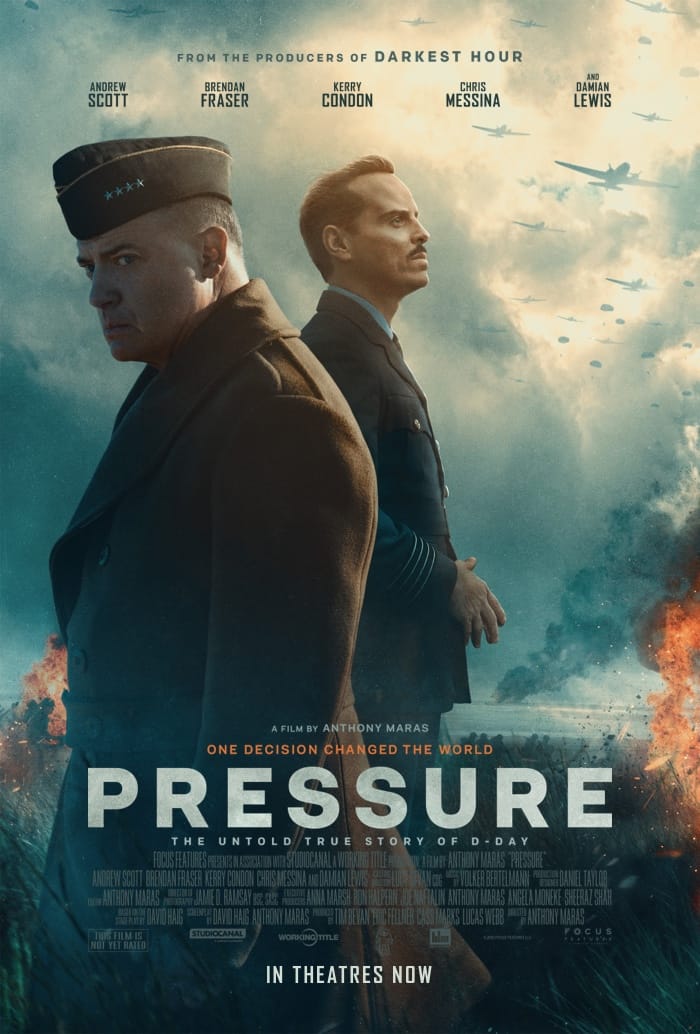
Pressure Movie Poster. Image: Pressure
Movie Review: Pressure – the Weather Before D-Day
“The eyes of the world are upon you.” – General Dwight D. Eisenhower’s “Order of the Day” to the Allied Expeditionary Force on D-Day
It was the largest seaborne invasion in history. The Allied Expeditionary Forces, commanded by General Dwight “Ike” Eisenhower, had assembled an armada to invade the Normandy coast of France and liberate Europe from the Nazis. It consisted of:
- 5,000 vessels, 7,000 ships, and landing craft
- 156,000 to 160,000 Allied troops
- 195,000 naval personnel from eight Allied nations
- 1,200-plane airborne assault
Yanks, Brits, and Canadians were to participate in an airborne assault.
But 72 hours before the scheduled invasion, there remained one imponderable…

Juno
HISTORY OF JUNE
June marks the year’s halfway point, the sixth of the twelve months in the Gregorian calendar we currently use in the West and the earlier Julian calendar, named for Julius Caesar, the namesake of July. Where do we get the name for June?
What’s In A Name?
Ovid, author of the bi-millennial best-selling magnum opus Metamorphoses — in which he gives Greek myths Roman names — suggests two possible etymologies.
- The first and more likely origin is the Roman goddess Juno, wife of Jupiter, who was known to the Greeks as Hera. She is the patroness of marriages, and most marriages take place in June. It was considered good luck to get married during June, though the good weather and school vacation could have something to do with it now.
- Ovid also submitted that the month was named for Iuniores, Latin for “young people,” in the same way that May is named for “elders” or Maiores. And as we all recall from the movie “Indiana Jones and the Last Crusade,” there was no J in Latin in the 1st century.
 HISTORY OF THE GOLDEN GATE BRIDGE
This week, we celebrate the 89th anniversary of the opening of the Golden Gate Bridge. On May 27, 1937, the bridge opened to traffic after more than five years of construction. I remember asking my father when I was young:
“Why isn’t the Golden Gate Bridge golden?”
He didn’t have an answer apart from his observation that it was expensive to paint.
 HISTORY OF TOWEL DAY
May 25 celebrates Towel Day to honor Douglas Adams, the author of the five (or six) book “trilogy” Hitchhiker’s Guide to the Galaxy.
Created in May 2001 to mark the passing of English science fiction humor author Douglas Adams, the day is set aside for fans of his writings to carry a towel throughout the day in honor of the author.
Why a towel? Stay tuned
Although it occurs on the same day as the anniversary of the premier of the first Star Wars movie – and the original radio version of tHGttG came out the year after Star Wars – Star Wars did not inspire The Hitchhiker’s Guide to the Galaxy.
I met Douglas Adams about thirty years ago when he spoke at a special Sun Microsystems company event. I recall noting that he talked at 19,200 baud (fast Internet speed in those days), meaning he spoke English more quickly than any other person I had heard before.

Star Wars: From the Adventures of Luke Skywalker
HISTORY OF STAR WARS
The original Star Wars movie premiered on May 25, 1977.
Long ago, in a galaxy far, far away…
…in Berkeley, in November 1976, I picked up a new science fiction novel called “Star Wars: From the Adventures of Luke Skywalker” by George Lucas. I did not know then that it was ghostwritten by Alan Dean Foster, a famous sci-fi writer, based on Lucas’ outline.
The following May, the movie initially debuted in only 40 theaters nationwide, with little of the advanced fanfare we are used to today. But word of mouth spread fast, and when I heard it was showing at the Coronet Theater in San Francisco, I went with my buddies the first week it was out—the line to get in stretched around the block.

Imperial Destroyer
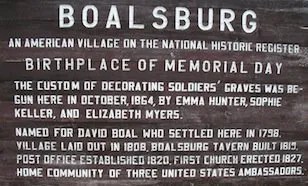 HISTORY OF MEMORIAL DAY: BOALSBURG, PA
The city of Boalsburg, Pennsylvania, an American village on the National Historic Register, claims to be the birthplace of Memorial Day, as do at least 24 other towns in America. I first visited this hamlet near State College, home of Penn State University, decades ago. Boalsburg’s claim goes back to a practice at the end of the Civil War. The town has a local museum and a history stretching over two centuries. The 19th-century feel of the village persists. A Memorial Day Festival is held there every year.
They have their own Facebook page and website.
Memorial Day Custom
Its claim is stated on a large sign near the center of town:
An American village on the National Register
BIRTHPLACE OF MEMORIAL DAY
The custom of decorating soldiers’ graves was begun here in October 1864, by Emma Hunter, Sophie Keller, and Elizabeth Myers.
Named for David Boal who settled here in 1798. Village laid out in 1808. Boalsburg Tavern built in 1819. Post Office established 1820. First church erected 1827. Home community of three United States ambassadors.
 HISTORY OF PENTECOST
The Feast of Pentecost is taken from the Greek word πεντηκόστη, which means “the 50th,” referring to the fiftieth day after the Jewish Passover and the Christian Easter.
- In the Jewish calendar, this aligns with the harvest festival Shavuot, known as the “Feast of Weeks,” which occurs seven weeks (7 × 7 days) or 50 days (inclusive) after Passover. It is a “fixed” date holiday. This year’s Jewish Pentecost began at sundown on May 21.
- In the Christian calendar, Passover played a role in several of Jesus’ visits to Jerusalem. Most famously, Pentecost, which followed Passover, marked the coming of the Holy Spirit, with “tongues as of fire” upon the Disciples of Jesus and the sound of a rushing wind, as recounted in the New Testament Book of Acts, Chapter 2. Because Emperor Constantine moved the date of Easter from its close connection to Passover to the first Sunday after the full moon following the vernal equinox,it became a “floating” date holiday. This year’s Christian Pentecost Sunday is May 24.

Staff Sgt, John Petro
HISTORY OF MEMORIAL DAY: WHY WE FIGHT
As we celebrate Memorial Day, the world is different from what it was two and a half decades ago. We have troops in countries that we didn’t have then, and after 9/11, we now remember why we fight.
The History Channel often reruns the HBO series Band of Brothers, the TV adaptation of the Stephen Ambrose book about a company of soldiers from the landing at Normandy through the end of World War II in Europe.
Band of Brothers and Why We Fight
During WWII, my father crossed paths with Company E, featured in “Band of Brothers,” while liberating the Dachau Concentration Camp.
My father’s story was originally told in part on HBO’s website during the 2001 premiere (via the Internet Archive) for the episode “Why We Fight,” about the liberation of Dachau and its many sub-camps.
 HISTORY OF THE WHO’s TOMMY
Fifty-seven years ago today, on May 23, 1969, the British rock group The Who released the double-album rock opera Tommy in the U.K. Commercially, the record went Gold in the U.K. and Double Platinum in the U.S. It was released in the U.S. on May 17 or 19; reports vary.
Several songs were released as singles that charted in the Top 20 in both the U.K. and the U.S. It reached #2 on the U.K. charts and #7. on the U.S. charts. Its success signified a breakthrough for the band and elevated The Who to a world-class touring and studio band. The album has sold over 20 million copies worldwide, representing about a fifth of their total records sold.
The rock opera tells the disturbing story of the fictional Tommy Walker, an apparently “deaf, dumb, and blind boy” who, following a childhood trauma, ultimately becomes the reigning Pinball Wizard. Despite numerous failed attempts to cure him, he has a spiritual awakening and becomes a sensational religious leader.
 HISTORY OF MEMORIAL DAY: WHICH WAR?
Memorial Day was not universally recognized as a shared American Holiday until after World War I. But that’s not how it started in the United States.
When did it begin?
Civil War and Memorial Day
Following the American Civil War, or the “War Between the States,” as it was known in the South, various locations began decorating the graves of fallen soldiers with flowers and flags, as I’ve written previously. This began in the mid- to late 1860s across the country, as almost every community had been touched by loss from the nationwide conflagration. Over 600,000 men and women had died, more than any war that Americans were involved in, including the combined losses suffered in World War I and World War II — because we were on both sides of the Civil War.
 HISTORY OF SHAVUOT

Tonight at sundown begins the Jewish holiday Shavuot, also known as the Feast of Weeks, and continues until sundown on May 23.
The holiday, also known in Greek as Pentecost, is on the sixth day of the Hebrew lunarsolar calendar month of Sivan, which means that in the Gregorian solar calendar, it may occur between May 15 and June 14. However, the holiday of Pentecost, in the Christian calendar at least, while it also counts from the date of Passover, is always on a Sunday, the seventh Sunday after Easter. In contrast, the Jewish holiday is fixed on the Hebrew date of 6 Sivan.
Shavuot, or Shavuos, is called the “Feast of Weeks” because it occurs seven weeks (7 × 7 days) or 50 days (inclusive) after the first day of the Jewish Passover. It is distinguished from the Christian Passover in that its date is tied to Easter, as determined at the Christian ecumenical Council of Nicaea in A.D. 325.
Shavuot is one of the three “Pilgrimage festivals,” holidays when work was forbidden, and Jews were to bring their sacrifices to the Temple in Jerusalem.

Jonathan Edwards. Image: Wikipedia

HISTORY OF JONATHAN EDWARDS
Jonathan Edwards (1703-1758) was the most important American preacher during the Great Awakening. He has been called “America’s greatest philosophical theologian.”
A revival in his church in Northampton, Massachusetts, between 1734 and 1735, was considered a harbinger of the Awakening, which unfolded a few years later. Edwards was more than an effective evangelical preacher, however. He was the principal intellectual chronicler, interpreter, and apologist for the Awakening.
What did he preach, what was the impact, and what was his legacy?